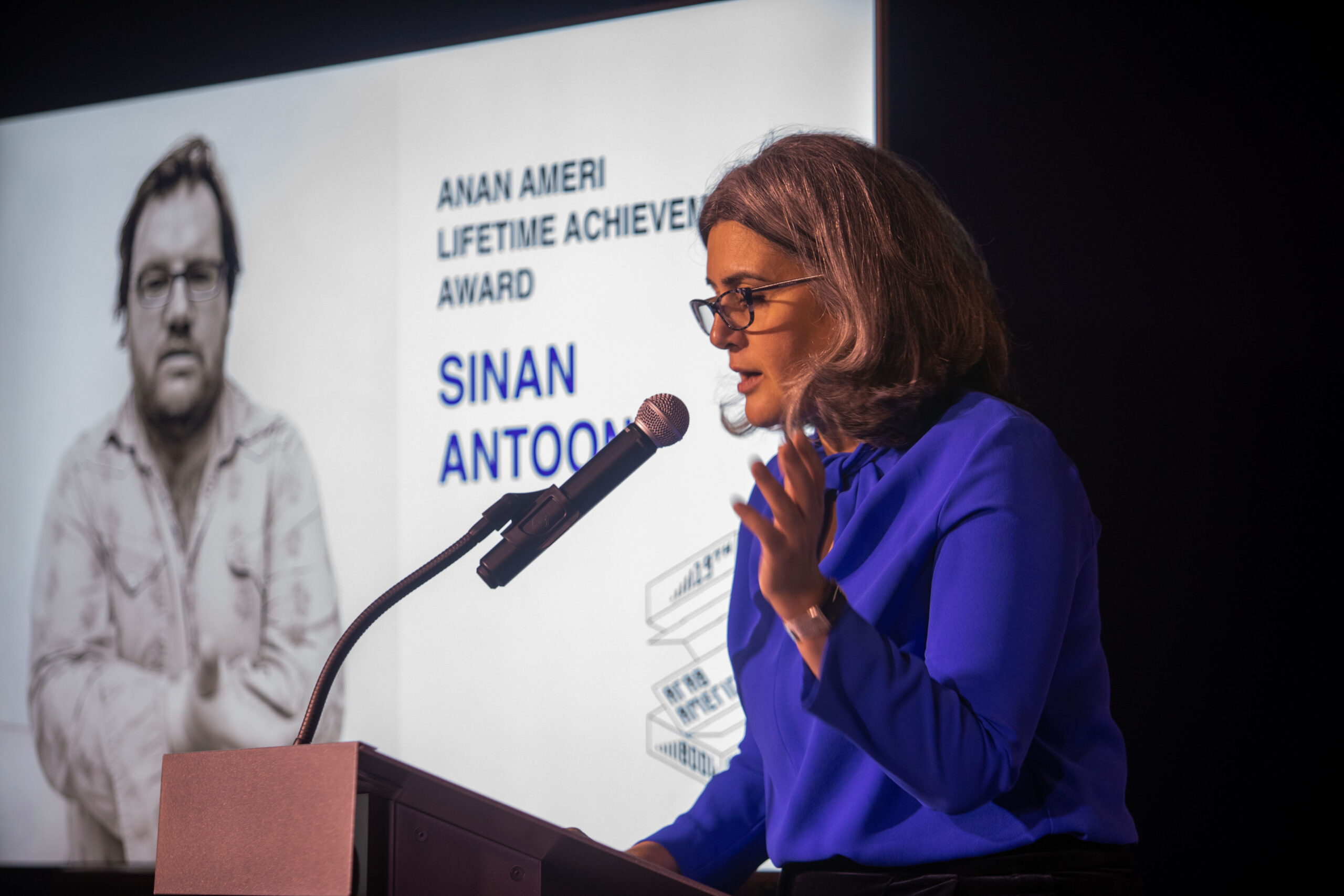
AANM Director Diana Abouali speaks to the impact of Sinan Antoon's literary work before presenting him with the Anan Ameri Lifetime Achievement Award.
On November 8, 2025, the Arab American National Museum (AANM) held its 19th Annual Arab American Book Awards. The Museum’s auditorium was packed to the brim with educators, scholars, authors, book lovers and more.
Rima Zalghout, librarian at the AANM Russell J. Ebeid Library & Resource Center, took the stage in front of a long table displaying several book-shaped awards and gave everyone a hearty welcome.
“I hope this year and every year you feel welcome walking through the doors of the Museum, whether it’s your first or your 30th time here,” Zalghout said. “Similarly, literature invites us warmly into the home of another, and tonight we are gathered to honor the power of storytelling and the writers who share, uplift and preserve our communities’ narratives.”
Every year, winners are selected by committees of judges, which include scholars, educators and authors. The awards ceremony is made possible through the support of the George Ellenbogen, Evelyn Shakir, Dr. Anan Ameri, and Drs. Barbara and Adnan Aswad endowment funds.
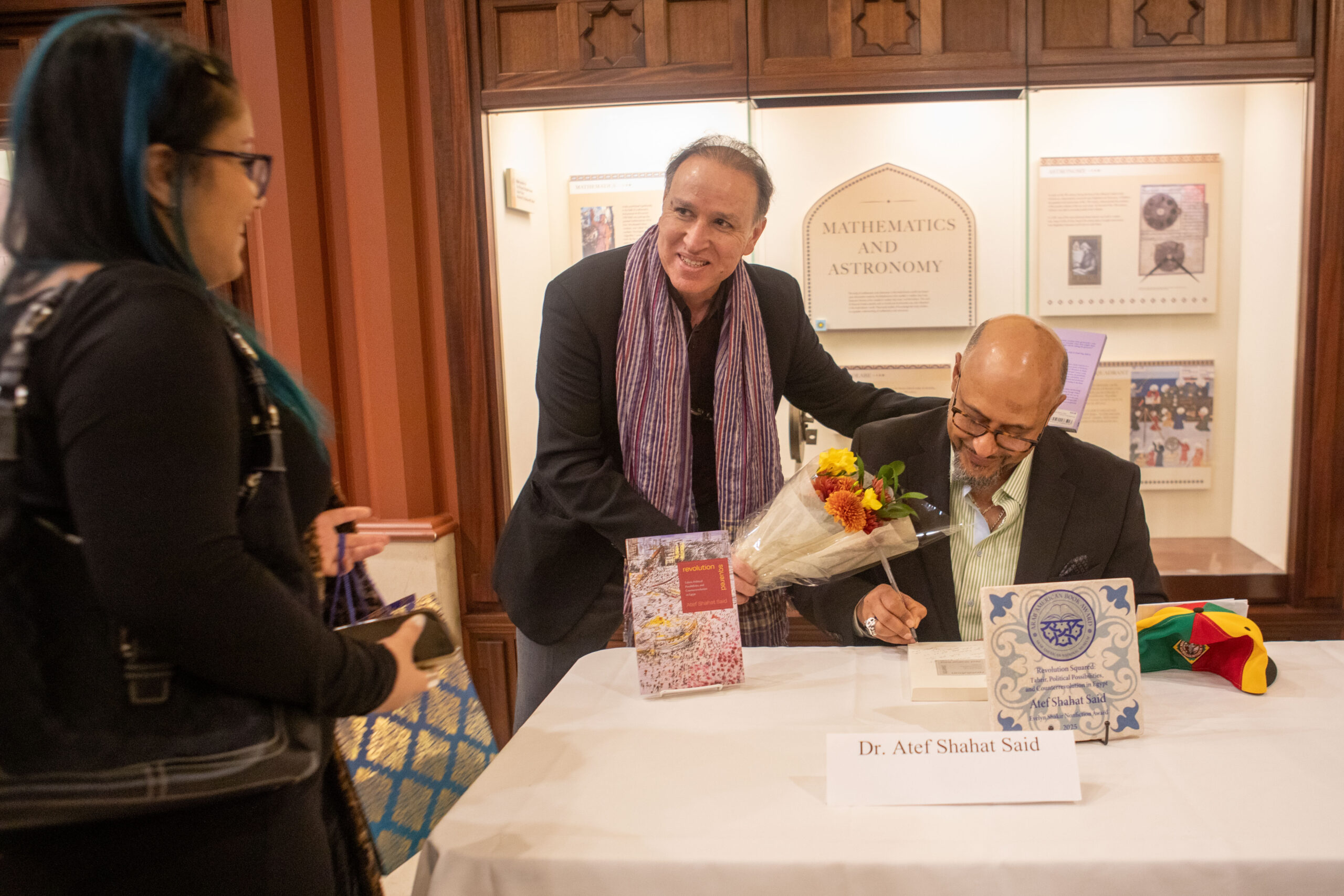
Dr. Evelyn Shakir Nonfiction Award Winners: Atef Shahat Said and noam keim
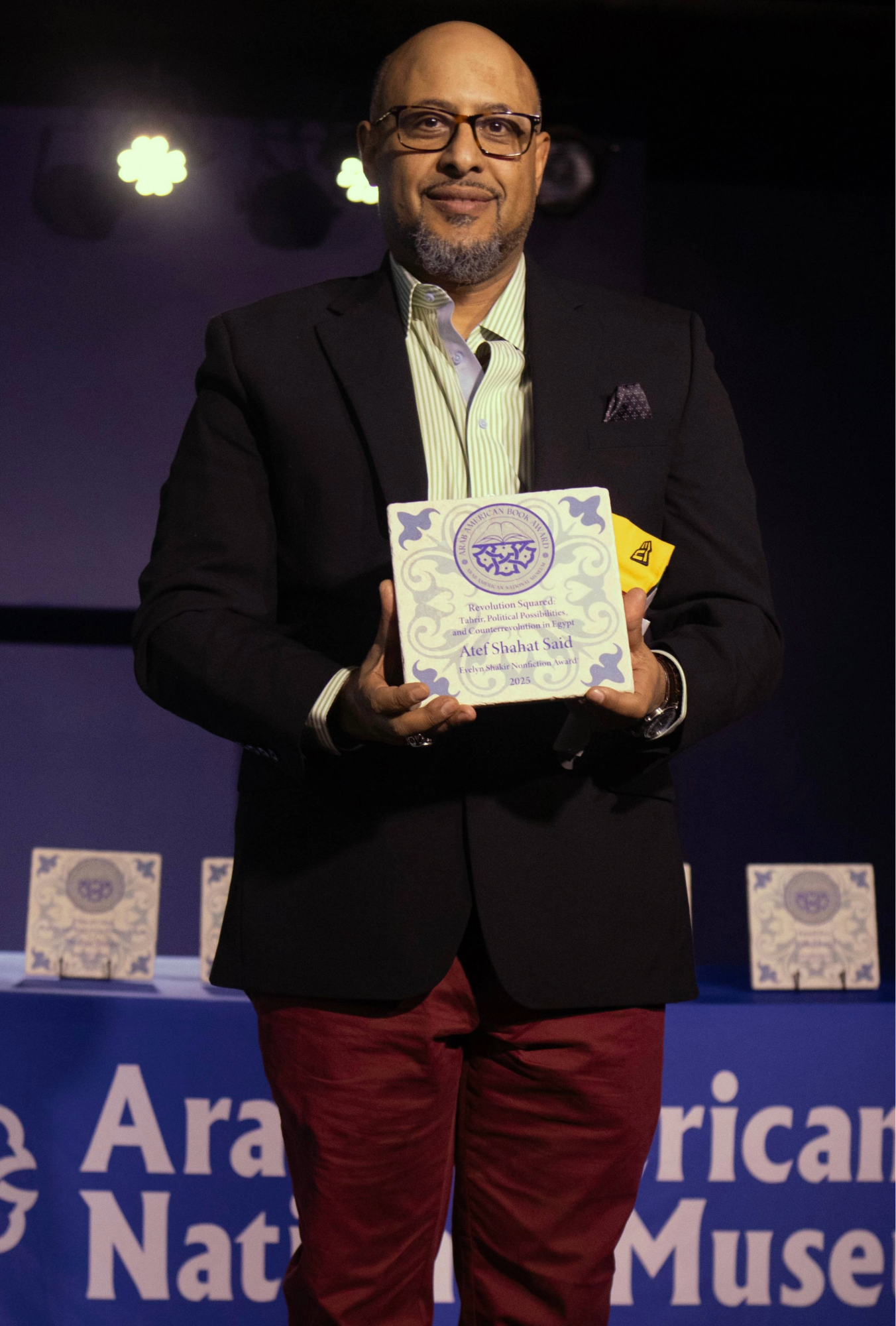
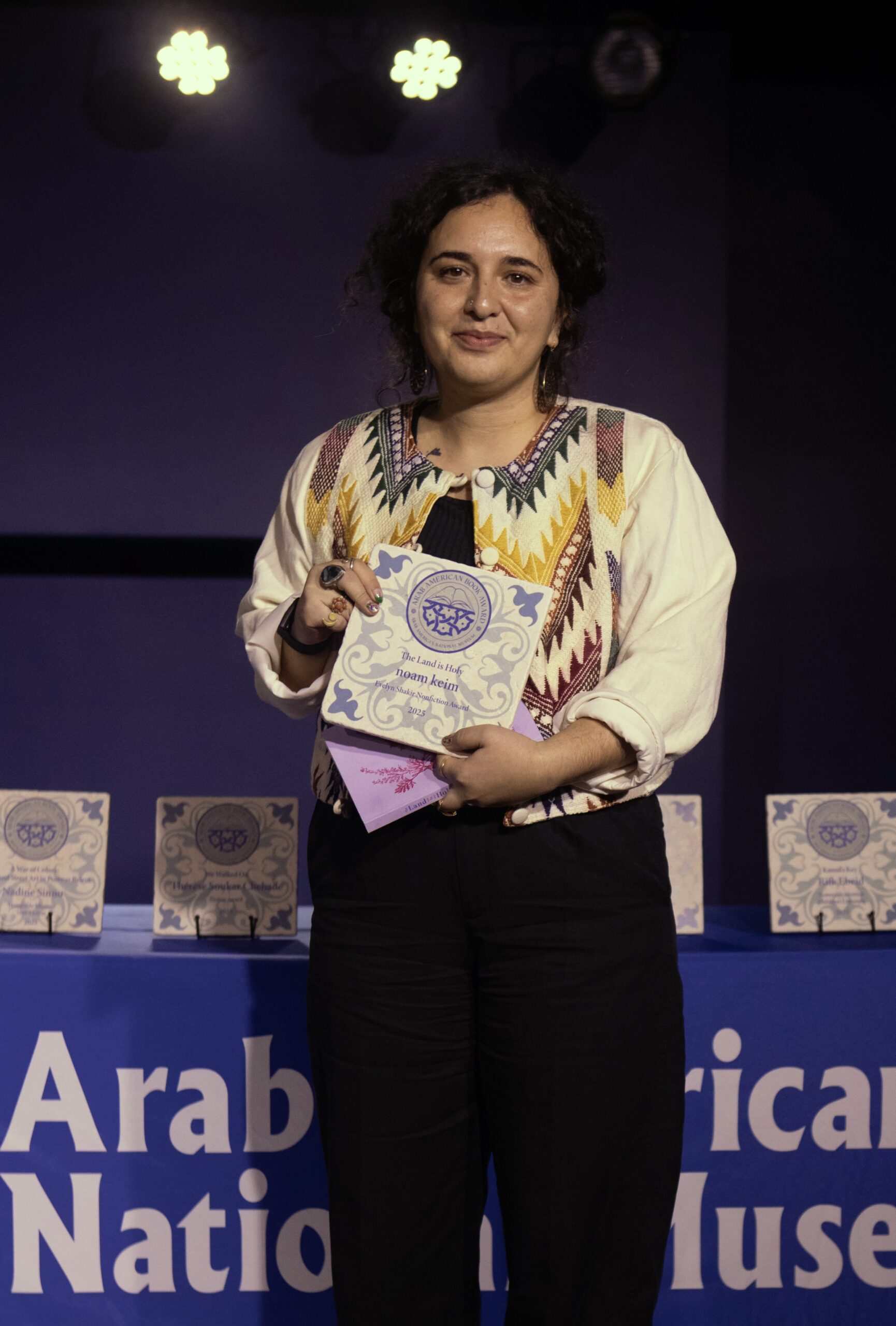
Left to right: Atef Shahat Said, author of "Revolution Squared" and noem keim, author of "This Land Is Holy," are the recipients of the 2025 Evelyn Shakir Nonfiction Award at the Arab American Book Awards.
AANM honored Atef Shahat Said with the Dr. Evelyn Shakir Nonfiction Award for his book "Revolution Squared: Tahrir, Political Possibilities, and Counterrevolution in Egypt."
Revolution Squared looks at the Egyptian revolution through an analytic lens that’s deeply grounded in evidence, demonstrating “how and why revolutions rise and fall,” but also how they point to future possibility of societal transformation. The idea of continuing to believe in humanity and an err on the desire of the human soul for freedom and justice has stuck with Said for a long time.
“When I wrote 'Revolution Squared,' I had two goals in mind,” he said. “The first is to argue against racist analyses by many Western scholars, and their claims, such as that we have no agency and the rising was doomed to fail… The second goal was to present an eyewitness account and a very rigorous and thick analysis about Arab agency, struggles, confusion, aspirations and reflections.”
Said didn’t expect to receive an academic award for a text that deviates from dominant analyses. “To receive an award from the Arab American National Museum is very different. It means a lot to me when the recognition comes from my own people,” he said.
He made a connection between the atrocities committed during Egyptian regimes he depicted in his book and those currently happening in Palestine.
“We have to continue to fight through analyses, work and sticking together with those who believe in humanity and justice for all. Free Palestine and free Arab World from dictatorship and imperialism.”
The second Dr. Evelyn Shakir Nonfiction Award went to noam keim for their essay collection, "The Land is Holy". Keim’s essays explore their personal, political and familial history through reflections on the natural world. Keim also seeks to reclaim a Jewish Arab identity while acknowledging the role Zionism has played in Arab identity erasure.
While keim's grandparents were Moroccan Jews from Marrakesh who denied their Arab identity, they grew up in France, confused and barred from exploring Arab-ness.
“The book was an attempt at reconnecting two lineages that predate Zionism and lies of Zionism, while also acknowledging my responsibility in the destruction of the land that is not mine and not my people’s.” keim said.
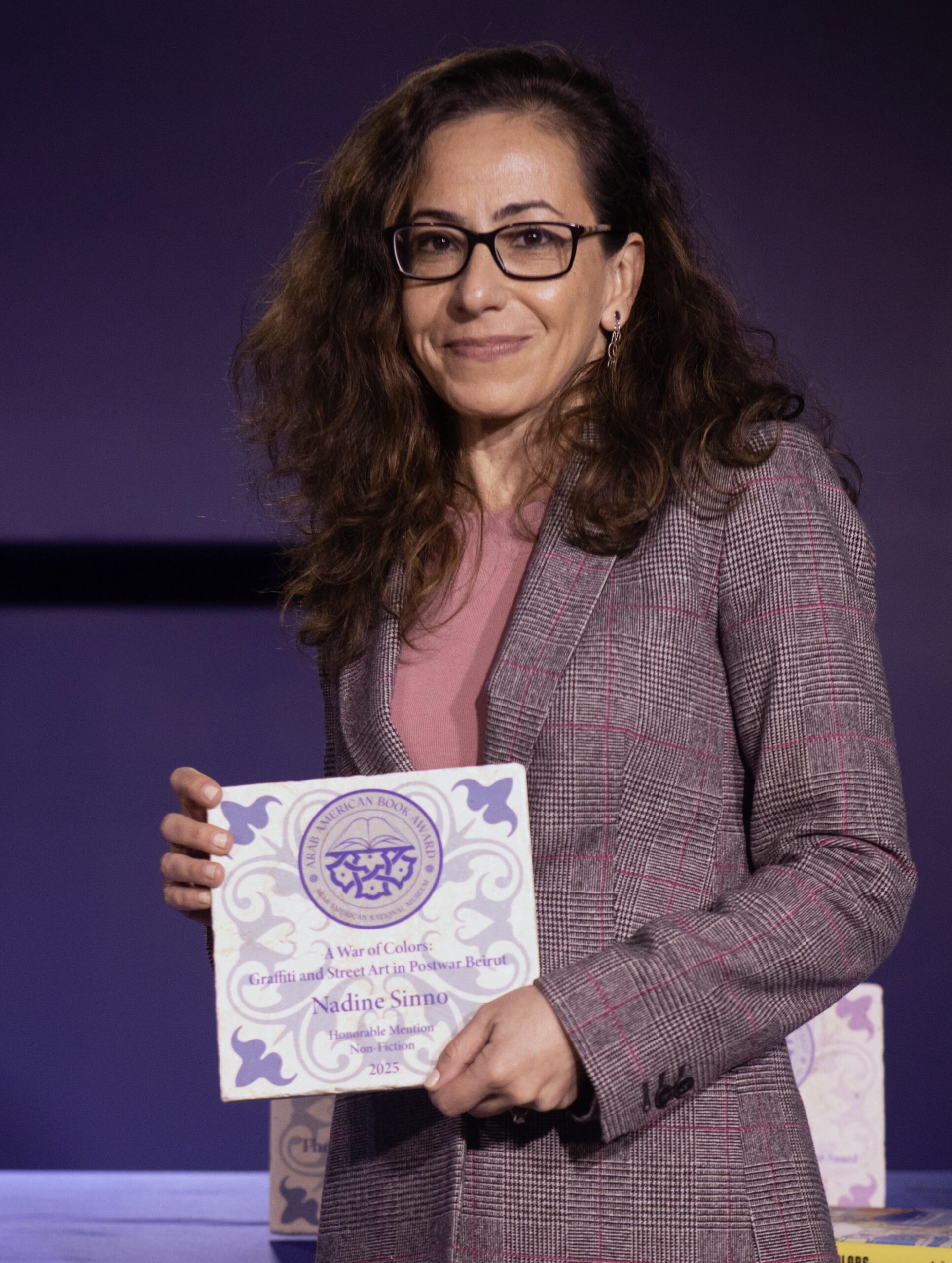
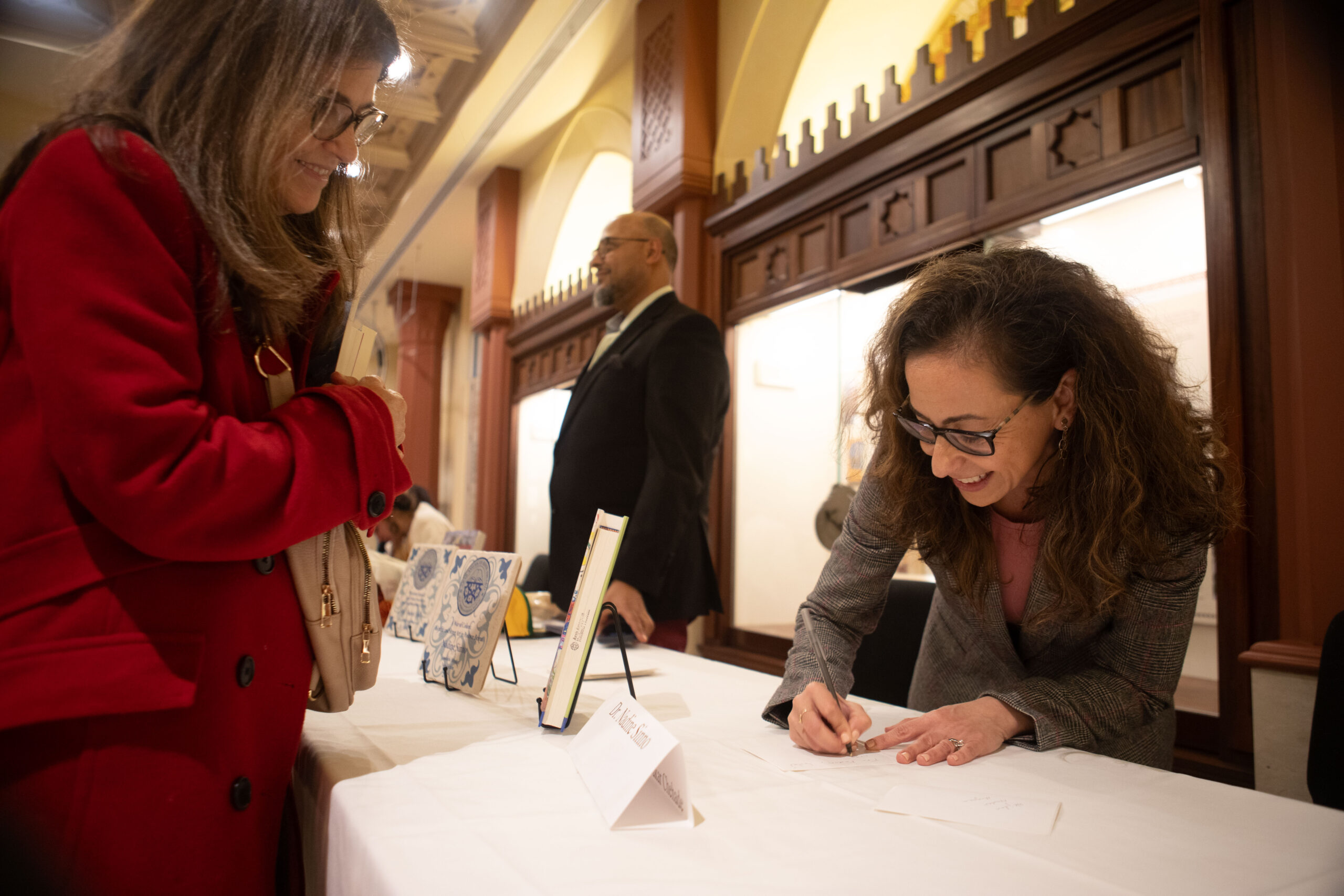
Nadine Sinno’s "A War of Colors: Graffiti and Street Art in Postwar Beirut" received an Honorable Mention in the Nonfiction category of the Arab American Book Awards.
Nadine Sinno accepted an Honorable Mention in Nonfiction for her book, "A War of Colors: Graffiti and Street Art in Postwar Beirut." Sinno, who was born and raised in Lebanon during the Lebanese Civil War, remembers being impacted by the new forms of visual resistance among the street art of the mid 2000s.
“I walked the streets for about eight years or more with my amazing husband and a camera, and we took pictures of every single scratch and scroll and beautiful mural and ugly slogans, and I learned a lot,” she said. “Beirut streets continue to be written and rewritten with stories that are sad at times and hopeful at others, continuously evolving in defiance of aesthetic and political stagnation.”
Sinno hopes the book will allow readers to think more deeply about graffiti and street art and the ways in which it engages society.
“This is a book about graffiti and street art, but it is also a book about civic engagement, protest, suffering, placemaking, joy and resistance through other means,” she said. Ultimately, it’s about average civilians longing for communication and communion and seeking it through the act of graffiti-making.
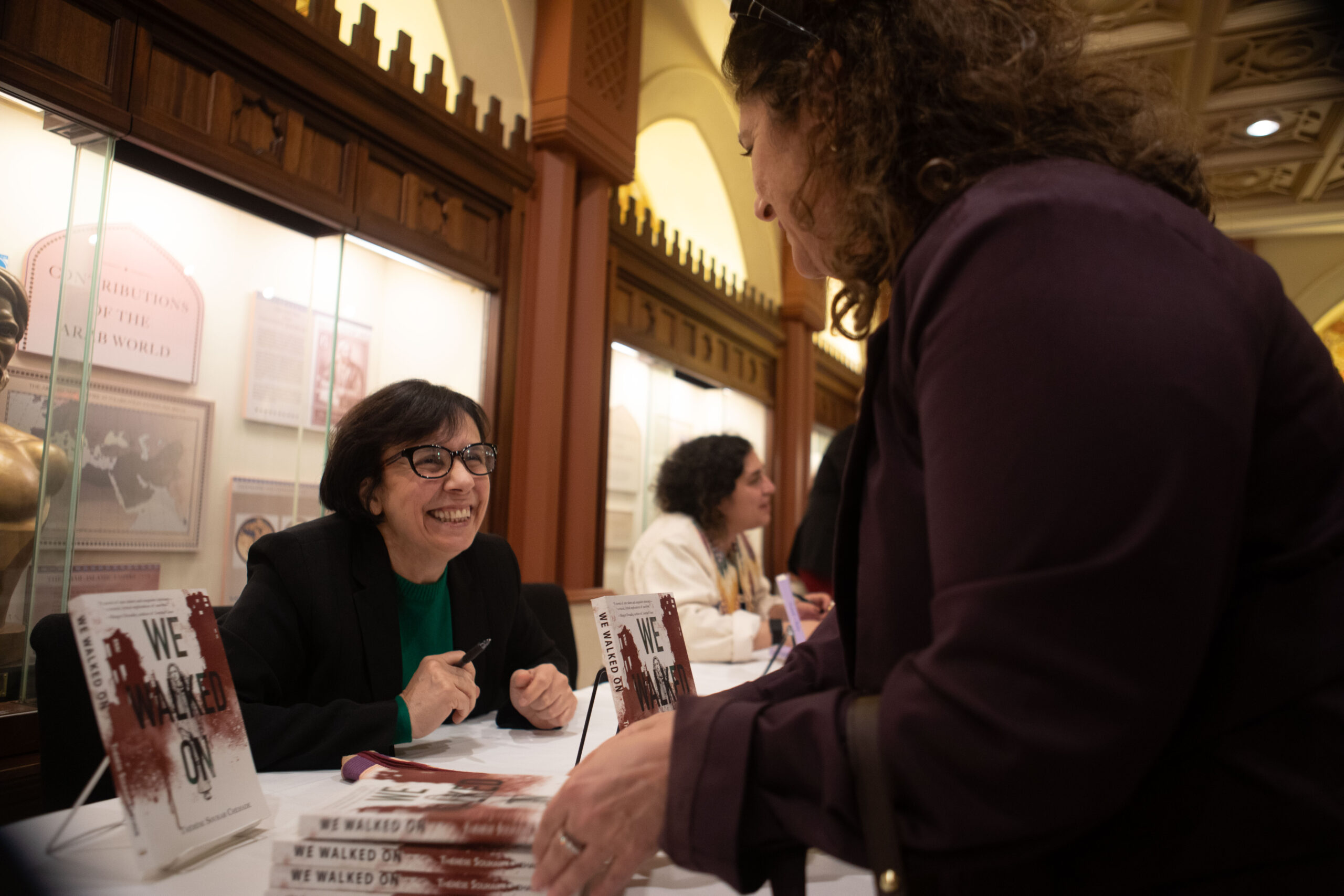
Thérèse Soukar Chehade's story, "We Walked On", follows an Arabic teacher at a Catholic girls’ high school, and one of his students in 1970s Lebanon. While it captures the stark realities of civil war, its charming and whimsical nature gives its readers a much-needed escape.
“What is it like for ordinary people to live through war?” Chehade said. “I wanted to show how people survive and how memory and imagination become lifelines.”
Chehade lived through the Lebanese Civil War as a young teenager. After spending many years in the US, her memories of Lebanon stayed with her, and she channeled her longing to honor those lost in We Walked On. “I think of the dead,” Chehade said. “They seem to outnumber the living. They press themselves to us, quietly asking to be remembered. There’s a compulsion among us, the living, to give voice to those who have been cast aside and can no longer speak and to honor their memory with the hard work of remembrance.”
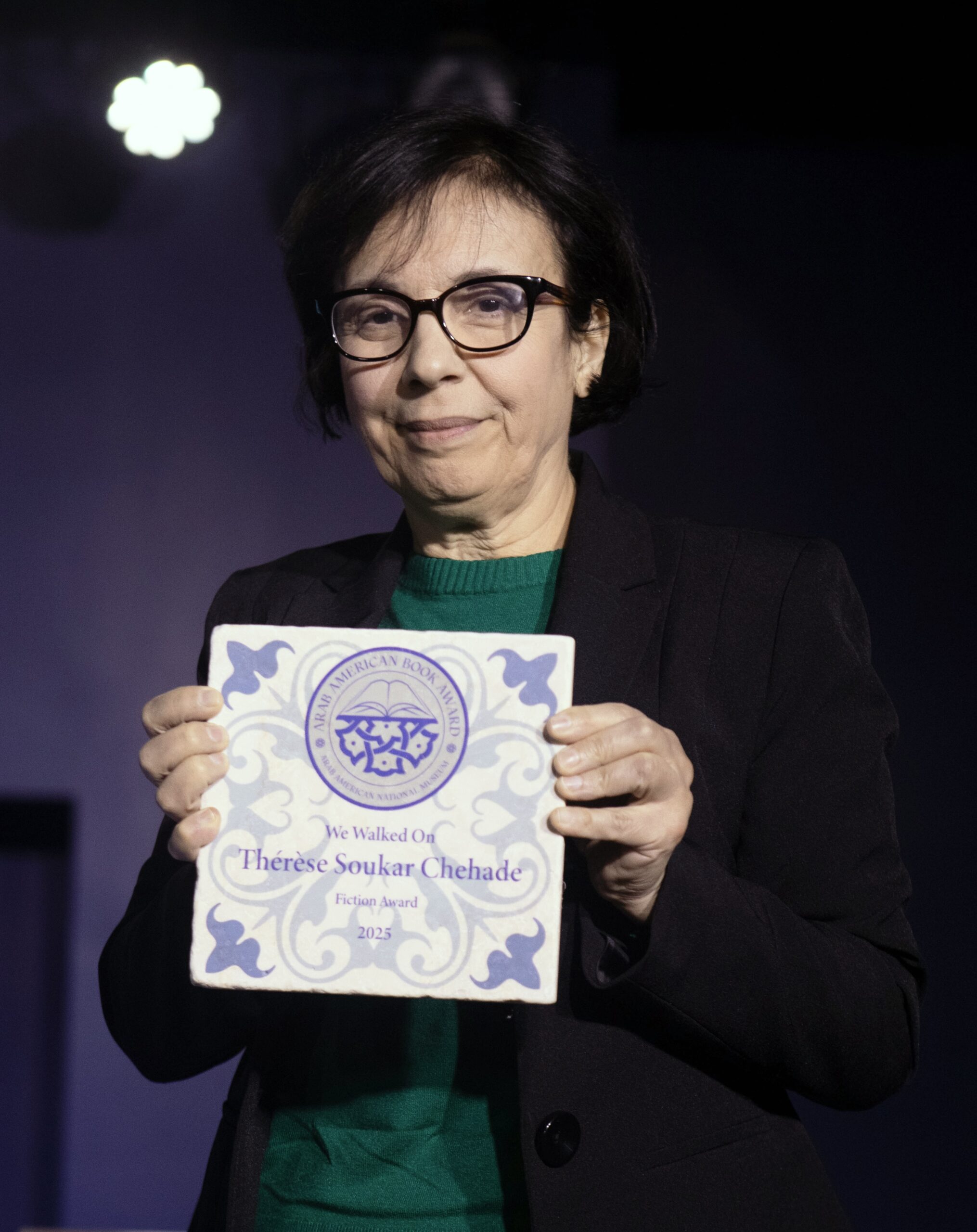
Thérèse Soukar Chehade's novel, "We Walked On," wins the Fiction Award at the Arab American Book Awards.
Children’s Literature Award Winner: "A Map for Falasteen" by Maysa Odeh
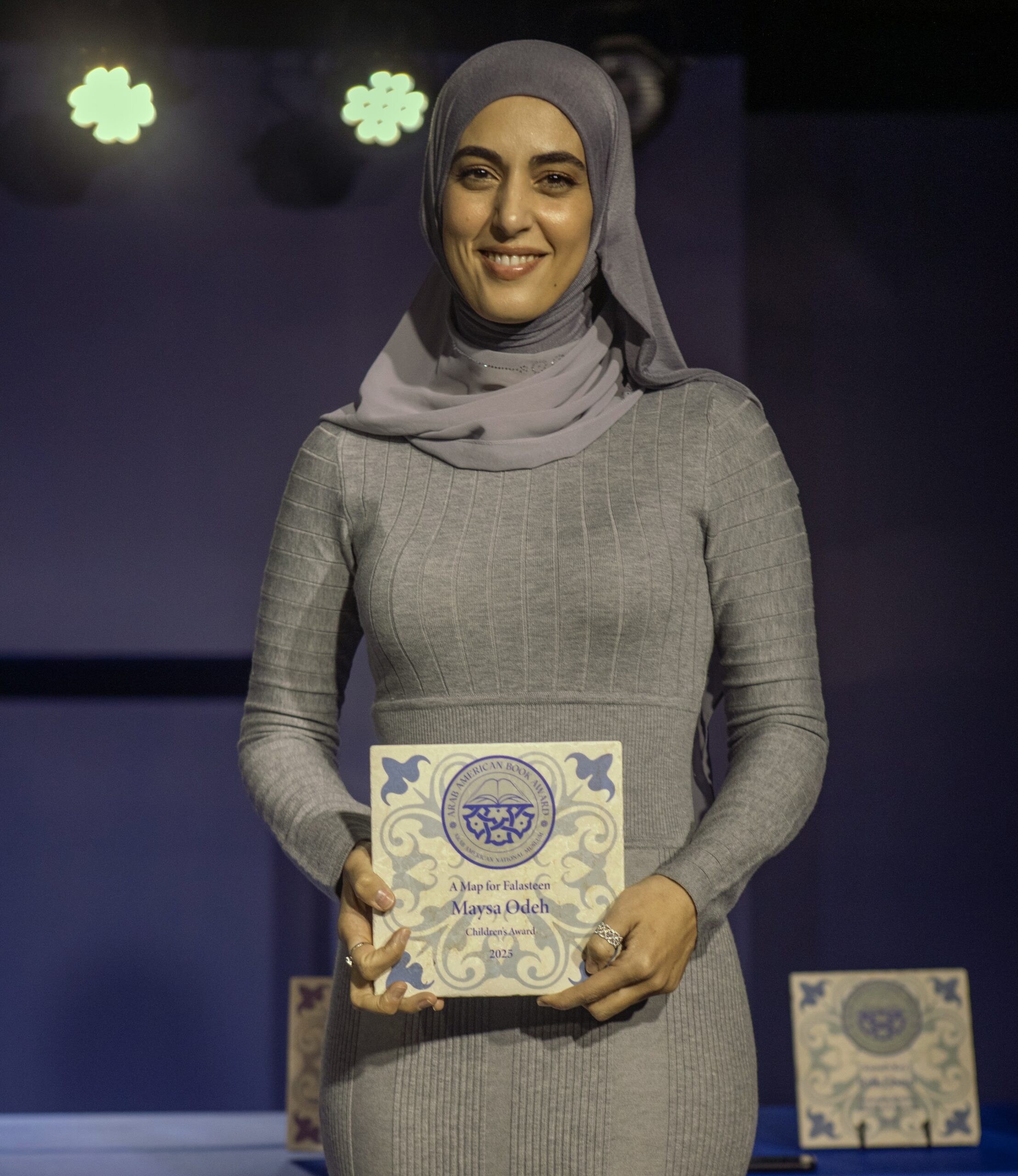
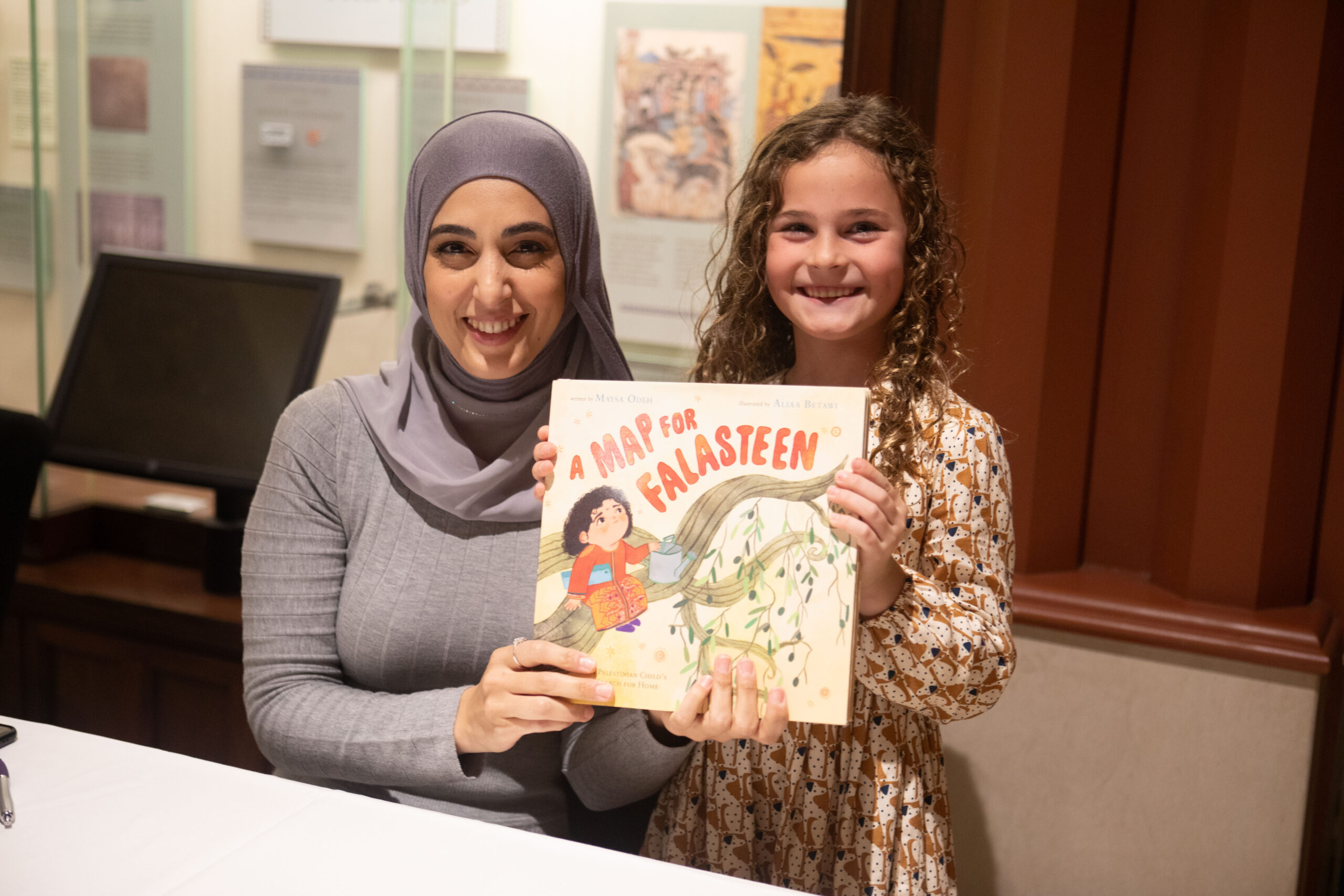
Maysa Odeh's book, "A Map of Falasteen," wins in the Children's Literature category at the Arab American Book Awards.
This year, the Children’s Literature Award went to Maysa Odeh for her book, A Map of Falasteen. The book offers a rich blend of facts, poetry and art depicting Palestine’s history and culture.
Odeh, a healthcare worker and first-time author, started writing the story after her six-year-old daughter asked her if the genocide in Palestine was over.
“Our kids are watching us and listening, even when we don’t think they are,” she said. “They deserve our answers, no matter how difficult their questions are. They deserve to understand how beautiful our homeland is and why we left it and to know it’s alive and waiting for us still.”
Honorable Mention, Children's Literature: "Kamal's Key" by Rifk Ebeid
Rifk Ebeid received the Honorable Mention in Children’s Literature for her book, Kamal’s Key, which tells the story of Kamal and more generally how the key has become an iconic symbol in Palestinians’ pursuit of justice for the right to return to their homes and homeland.
“Kamal’s key doesn’t just represent one moment in history,” Ebeid said. “It is the story of every single Palestinian family spanning generations. It’s about overcoming loss, even when the circumstances feel hopeless. It’s about how to be a Palestinian in this world. May you be like Kamal, resilient and adaptable to whatever comes your way, while never losing your essence and purpose in this world.”
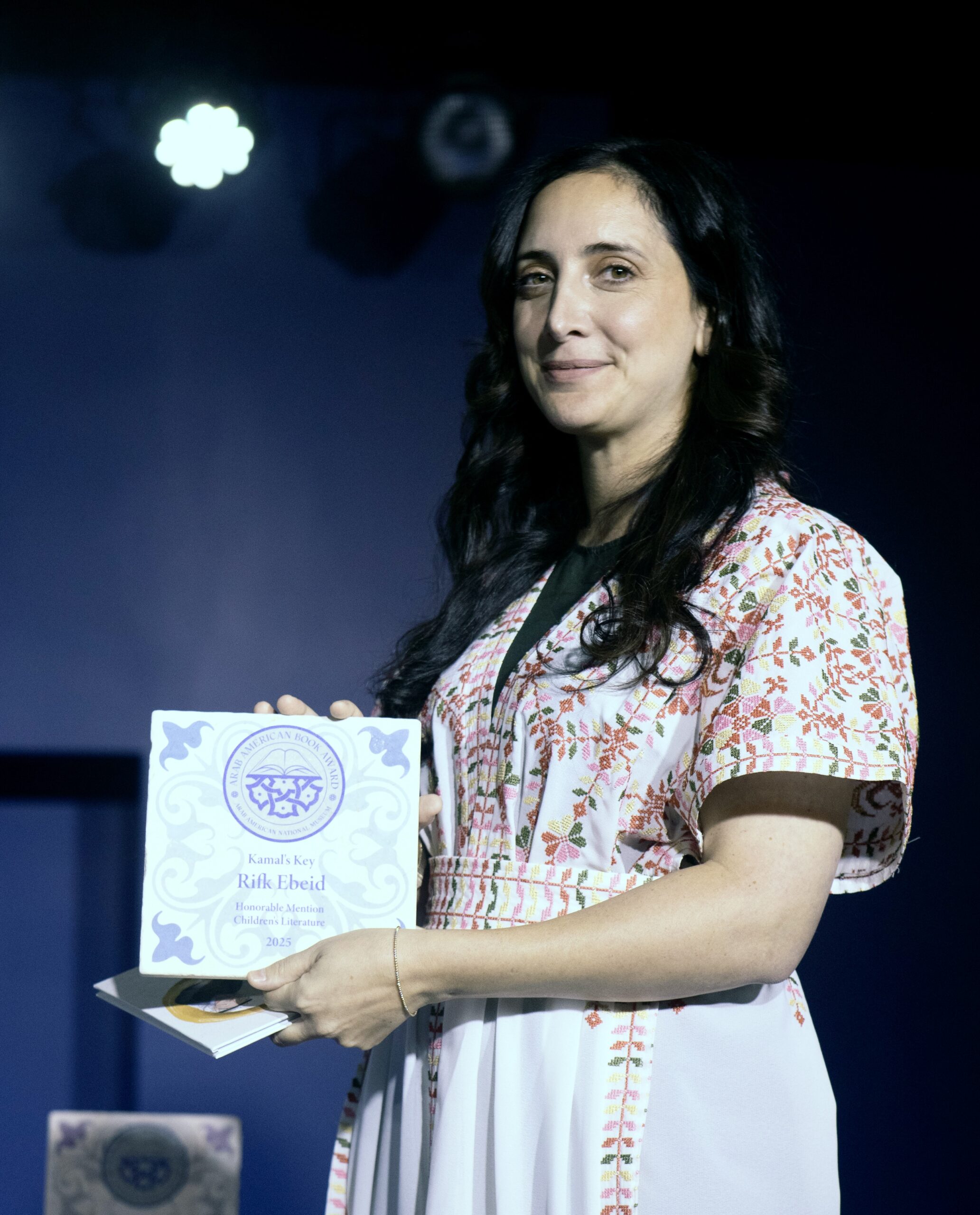
Rifk Ebeid's book, "Kamal's Key," receives Honorable Mention the Children's Literature category at the Arab American Book Awards.
Dr. George Ellenbogen Poetry Award Winner: "Something About Living" by Lena Khalaf Tuffaha

"Something About Living" by Lena Khalaf Tuffaha wins the George Ellenbogen Poetry Award at the Arab American Book Awards.
The Dr. George Ellenbogen Poetry Award went to "Something About Living" by Lena Khalaf Tuffaha. In her poetry, Khalaf Tuffaha asks readers to investigate the Arab American voice of today through individual and collective stories, histories and languages.
As Khalaf Tuffaha took the stage, she touched on the anger and grief she has been grappling with as a Palestinian and human in this moment in America. Anger, she reminds us, is a natural, useful outlet for affirming one’s humanity.
“I have been thinking a lot about that anger and about holding onto it, as a necessary part of our dignity,” Khalaf Tuffaha said. “People who deserve to be free and people who have their full human rights are and should be enraged at what we are being made to endure. It’s hard to sit with that in this country, in this moment, but you have the right to do that. You deserve to live in your full humanity.”
Honorable Mention, Poetry: "Cue" by Siwar Masannat
While Siwar Masannat was unable to attend the award’s presentation, she created a video for attendees, expressing her gratitude to receive such a high honor for her poems in Cue. “This recognition is the most meaningful honor I’ve received for my poems, and I am so grateful to the museum and the judging panel,” she said. “What a delight to be listed alongside Lena Khalaf Tuffaha’s Something About Living, a book that I absolutely cherish. Congratulations to all of the awardees. All of my gratitude also to my family, blood and chosen, who show me how to move with care in this world.”
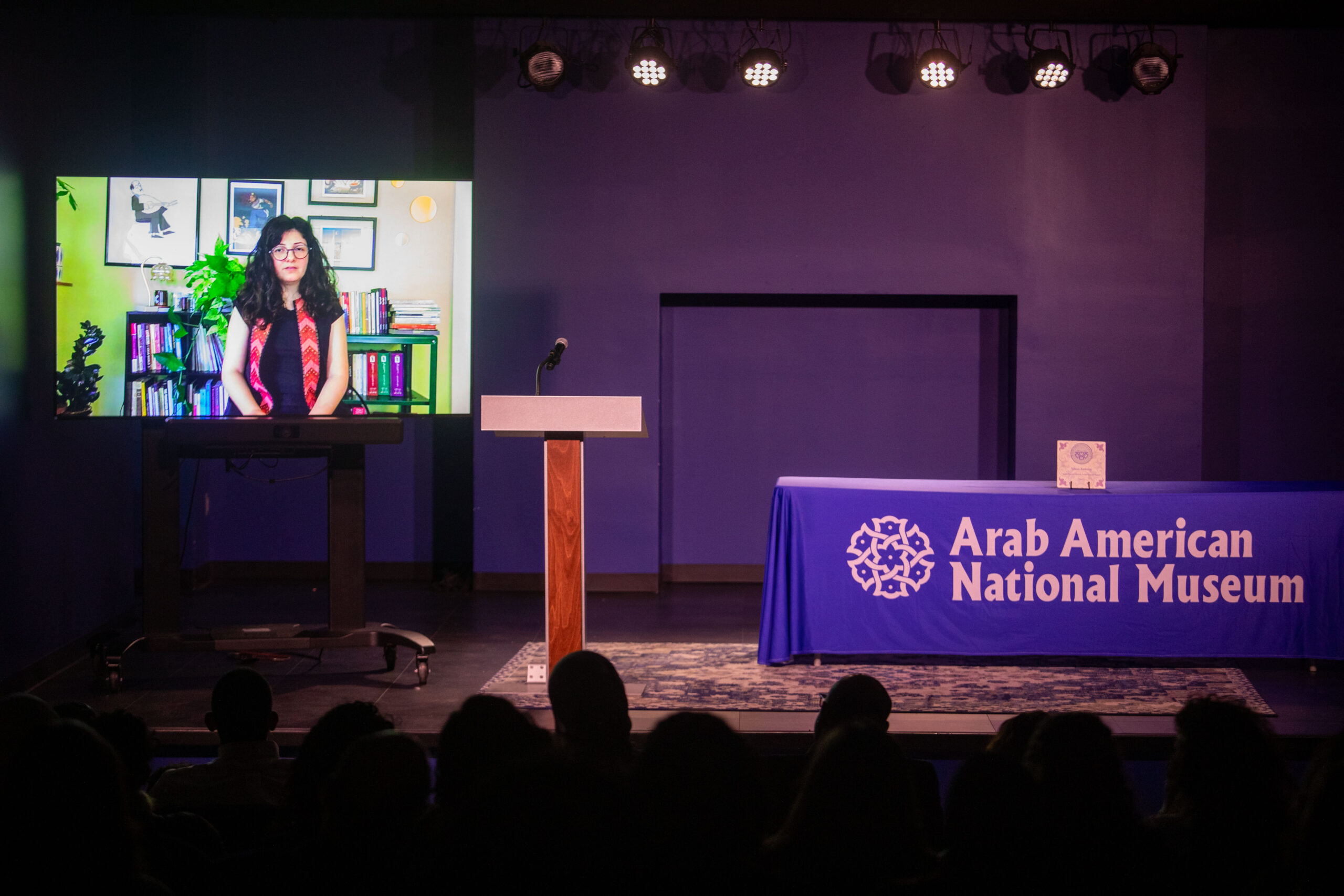
"Cue" by Siwar Masannat receives Honorable Mention in Poetry at the Arab American Book Awards.
Anan Ameri Lifetime Achievement Award Winner: Sinan Antoon
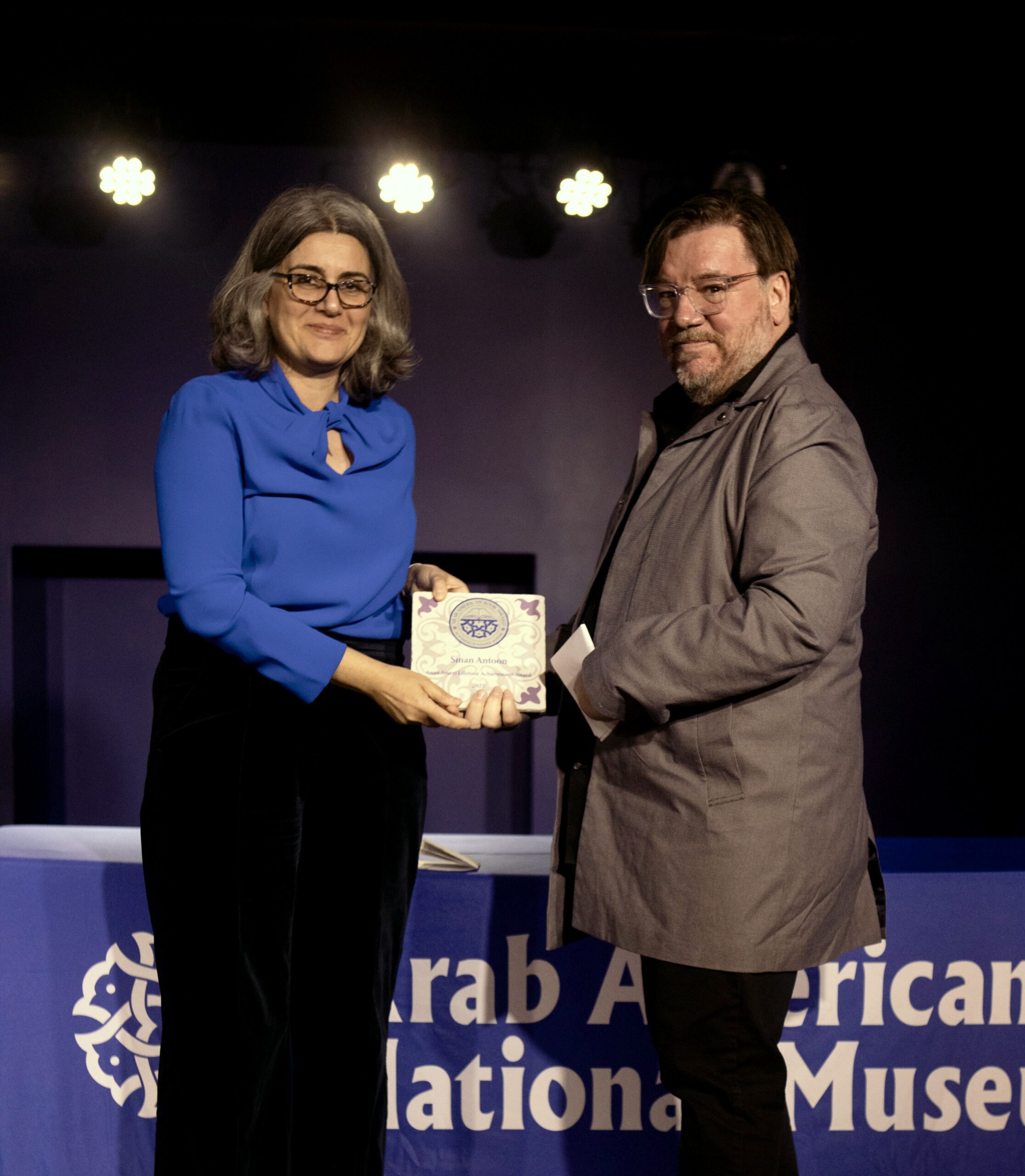
Dr. Diana Abouali presents Sinan Antoon with the Anan Ameri Lifetime Achievement Award at the Arab American Book Awards.
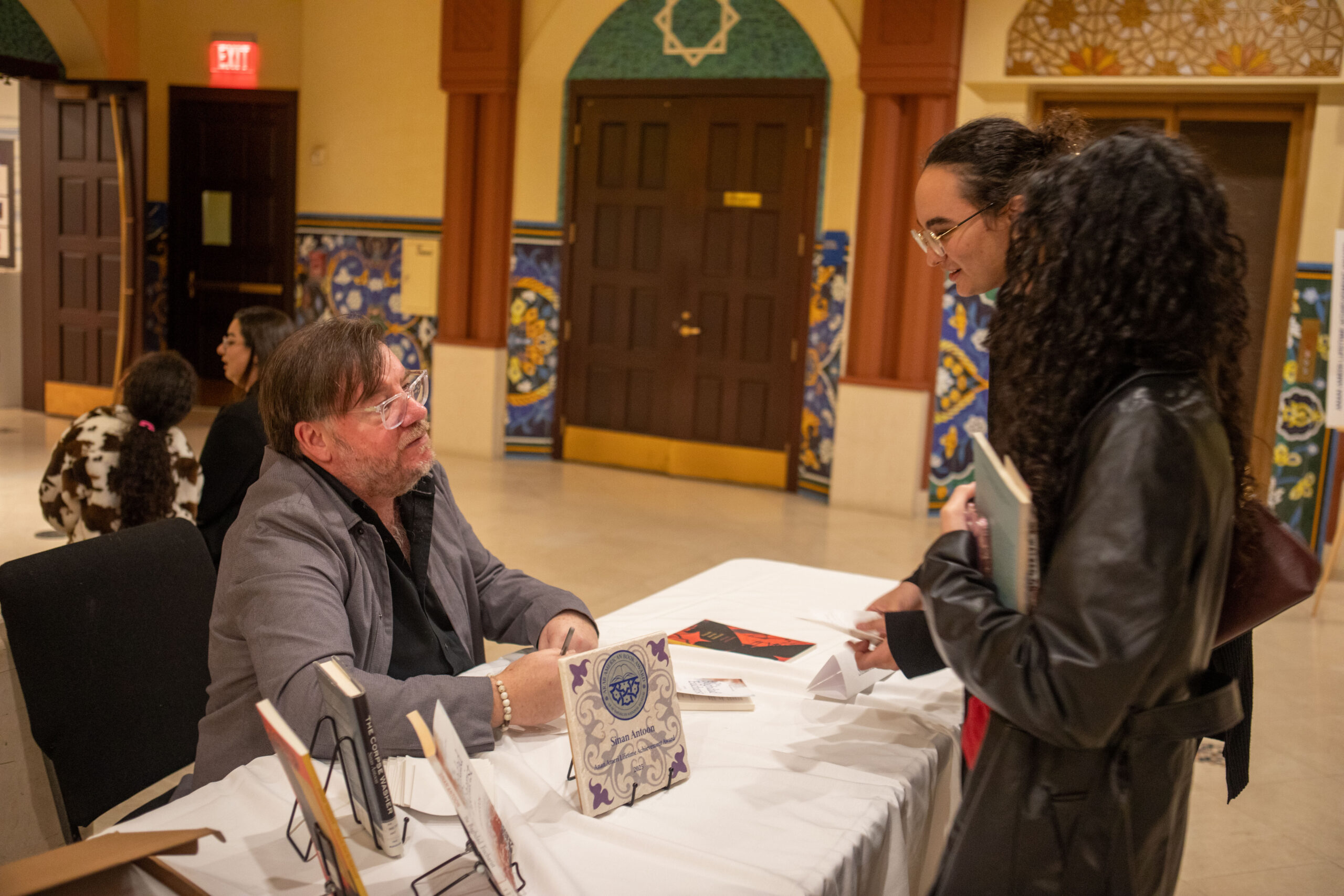
Last but certainly not least, poet, novelist, translator and scholar, Sinan Antoon was honored with the Anan Ameri Lifetime Achievement Award. The award recognizes the exceptional body of work by an individual or organization whose contributions advance the field of Arab American writing.
AANM Director Dr. Diana Abouali presented Antoon with the prestigious award. “His pen is his instrument, and with it he unleashes cascades of beautifully crafted poetry, fiction and essays in both English and Arabic…” Dr. Abouali said. “I could go on and on about Sinan’s accomplishments, piercing commentaries, criticisms of the American imperialist project in the Middle East, or about his erudite scholarship on classical Arabic poetry… On top of all of this, he’s one of the kindest people and definitely the funniest person I know.”
Antoon showed us what Dr. Abouali meant by the funniest person she knows when he said, “When I got the prize, a friend was concerned and emailed me and said, ‘What, did you die? Why did they give you a lifetime?’”
Antoon acknowledged his wife and family for encouraging him to write.
“Maybe he forgot, but in 1991, in a basement in Baghdad during the intense US bombing, my brother told me, ‘Make sure to write about what we are going through.’ And I did.”
Wars and their aftermath have been a common thread in most of Antoon’s writing. “Wars don’t always end for civilians,” he said. “They go on in various visceral ways, whether through the lethal effects on civilians’ bodies and the bodies of their loved ones who lie in graves, their scars, and the destruction of their homes, cities and social spaces. And through the obliteration of infrastructure and institutions that took decades to build, the toxicity delivered by smart weapons in the environment for thousands of years to come, and in the genes of the unborn.”
Antoon touched on an important lesson he learned from his literary ancestors: writing is a subjective act, and once a text exists, it becomes part of the collective human experience, “irrespective of the author’s desires or intentions.”
“Once a text is published and read by others, it becomes a public act with consequences,” he said. “It narrates a world and plots histories that will inscribe meanings that will be in conversation with other narratives, echoing, questioning, disrupting, disturbing, and contesting them. Divorcing a text from its political context is itself a political act. This, I learned from my literary ancestors—those poets, novelists, and intellectuals whose work and words shaped mine and illuminated my path, some of whose words I had the pleasure of translating from Arabic.”
Membership helps make programs like the Arab American Book Awards possible, supporting AANM’s mission to document, preserve and share Arab American history, culture and stories with the public. Become a Member today.