Saturday, July 18th, 2026
1:00 PM – 3:00 PM
RSVP Required
In-person registration
Live-stream registration
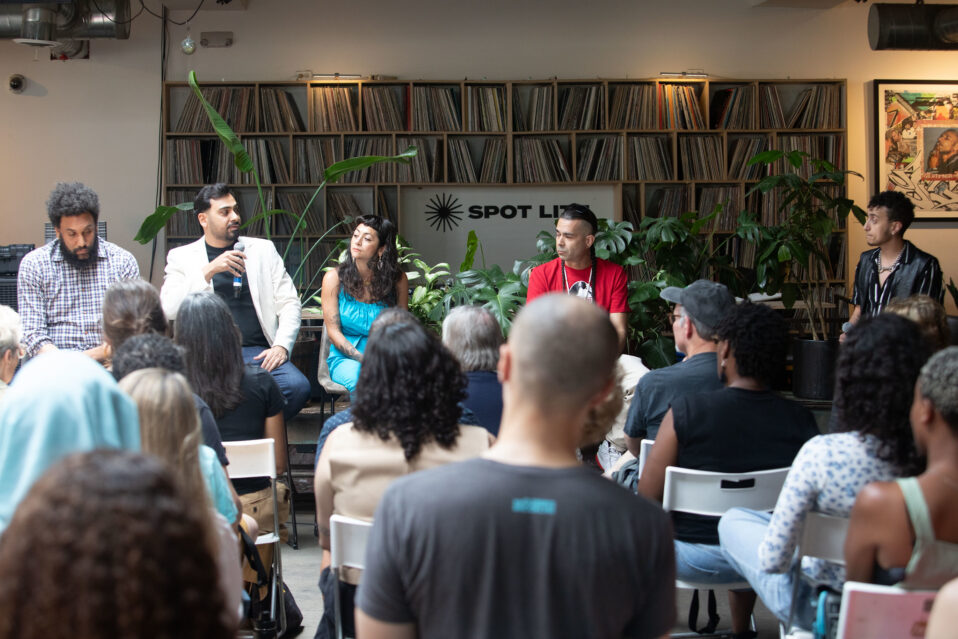
The Concert of Colors Forum on Community, Culture & Race, one of the largest annual events produced by AANM, is a dynamic gathering of artists, activists and advocates who use performance and dialogue as a tool for advocacy and community building. This year’s theme is “Remember/Reimagine: Truth-Telling through Art, 250 Years On” marking the 250th of the United States.
It is the mission of the Concert of Colors to represent people of different communities by giving them their own spotlight to express their voices, showcase their talents and let their stories be told.
This year’s program will be presented both in person and virtually online. Location TBD.
Moderator info:
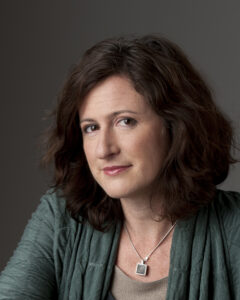
Neda Ulaby is a reporter on arts, entertainment, and cultural trends for NPR’s Arts Desk.
Scouring the various and often overlapping worlds of art, music, television, film, new media and literature, Ulaby’s stories reflect political and economic realities, cultural issues, obsessions and transitions.
A twenty-year veteran of NPR, Ulaby started as a temporary production assistant on the cultural desk, opening mail, booking interviews and cutting tape with razor blades. Over the years, she’s also worked as a producer and editor and won a Gracie award from the Alliance for Women in Media Foundation for hosting a podcast of NPR’s best arts stories.
Ulaby also hosted the Emmy-award-winning public television series Arab American Stories in 2012 and earned a 2019 Knight-Wallace Fellowship at the University of Michigan. She’s also been chosen for fellowships at the Getty Arts Journalism Program at USC Annenberg and the Knight Center for Specialized Journalism.
Before coming to NPR, Ulaby worked as managing editor of Chicago’s Windy City Times and co-hosted a local radio program, What’s Coming Out at the Movies. A former doctoral student in English literature, Ulaby has contributed to academic journals and taught classes in the humanities at the University of Chicago, Northeastern Illinois University and at high schools serving at-risk students.
Ulaby worked as an intern for the features desk of the Topeka Capital-Journal after graduating from Bryn Mawr College. But her first appearance in print was when she was only four days old. She was pictured on the front page of the New York Times as a refugee when she and her parents were evacuated from Amman, Jordan, during the conflict known as Black September.
Keynote speaker & Panelist:
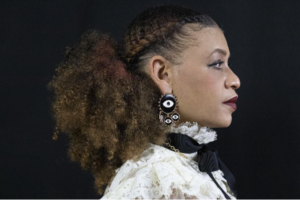
Sabrina Nelson was born in the wake of the ’67 Rebellion in Detroit, Michigan. She is a painter by degree from Detroit’s College for Creative Studies. Influenced by Yoruba Religion, as well as Eastern and African philosophies, Sabrina’s work is a combination of spirit, motion, and intimacy. Not limited by two dimensions, the scope of her work also includes sculpture, objects, performance and installations.
Sabrina has been a professional artist for over 35 years and an educator for nearly as long. As a studio art teacher at the Detroit Institute of Arts, she lectures and performs artist demonstrations. She is also on staff at the College for Creative Studies, where she works hard to motivate and prepare students to pursue art degrees in Detroit.
Sabrina has lectured on the preservation of Black Feminism in Art at the Charles H. Wright Museum of African American History in Detroit. She is a guest curator at both The Carr Center and the Music Hall Performing Arts Center. For over 30 years, she has judged art competitions, curated numerous art talks and exhibits, and conducted interviews of guest artists for the City of Detroit’s Culture video channel MyDetroitCable.
Her work has been exhibited at the Detroit Institute of Arts, the Charles H. Wright Museum of African American History, the Museum of Contemporary Art Detroit, and the African American Art in Culture complex in San Francisco. Sabrina’s work has also been exhibited in Florida, New York, Louisiana, Illinois and Ohio. Her work is in the permanent collection of the Charles H. Wright Museum of African American History and private collections in Florida, New York, Ohio, Georgia, California, and Michigan. She has also shown work at Jakmel Gallery as part of Art Basel Miami, as well as at the American University in Paris.
Panelists bios:
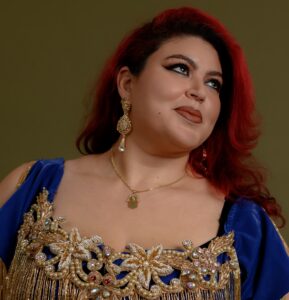
Esraa Warda is a New York-based Algerian-American dance artist and educator in Algerian dance forms such as Raï, Chaoui, and Assimi. She sees her body and practice as a living archive: a revival of Algerian cultural memory and movement aesthetics, a reclamation of decolonial identity, and an ongoing process of embodying a liberated tradition. She has garnered recognition from esteemed publications such as the New York Times, VOGUE Arabia, AZEEMA Magazine, and The Metric, and even earned her a nomination as one of BBC’s 100 Women in 2022. Today, you can find Warda on television on a PBS episode of Bare Feet by Michela Malozzi speaking about the movement and history of Algerian Rai dance or performing on NPR’s Tiny Desk. She is also a curator at the Center for the Arts at Virginia Tech and Citylore Gallery, a cultural projects manager and producer, an occasional tour manager, and a first-time filmmaker working on her debut documentary in Algeria, set to be released in late 2026.
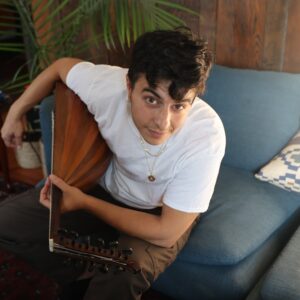
Clarissa Bitar is an award-winning Palestinian oud musician and composer born, raised, and based in Los Angeles, California. Clarissa has had the privilege of performing around the country and internationally. They graduated from UC Santa Barbara with a degree in Music and an emphasis in Ethnomusicology. To further their studies, Clarissa studied with prominent Arab musicians including Simon Shaheen, Charbel Rouhana, and Bassam Saba. They have incorporated oud with a multitude of genres, ranging from R&B to Pop to Hip Hop and Rap. Their latest album, titled ‘Hassan Sabi,’ is out now on all streaming platforms.
Their music has been featured on Netflix, on the radio, in film, and at exhibits around the world. They released a joint poetry-oud EP with Palestinian poet Mohammed El-Kurd in January of 2019 titled Bellydancing on Wounds, as well as a solo EP, Bayati.
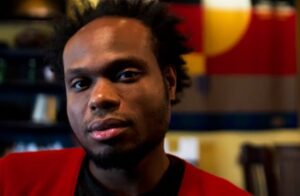
Jamaal May was born and raised in Detroit. His first book, Hum (2013), won a Beatrice Hawley Award and an American Library Association Notable Book Award and was an NAACP Image Award nominee. Hum explores machines, technology, obsolescence, and community; in an interview, May stated of this collection, “Ultimately, I’m trying to say something about dichotomy, the uneasy spaces between disparate emotions, and by extension, the uneasy spaces between human connection.” May’s poems have appeared widely in journals such as Poetry, New England Review, The Believer, and Best American Poetry 2014. His second collection is The Big Book of Exit Strategies (2016).
May’s honors and awards include a Spirit of Detroit Award, an Indiana Review Poetry Prize, and fellowships from Cave Canem, Bread Loaf Writers’ Conference, The Frost Place, the Lannan Foundation, and the Stadler Center for Poetry at Bucknell University. He was the 2014–2016 Kenyon Review Fellow at Kenyon College and a recipient of the Civitella Ranieri Fellowship in Italy. He was a Visiting Poet at Smith College, and he serves as Distinguished Writer at the University of Michigan, Ann Arbor.
May has taught poetry in Detroit public schools and worked as a freelance sound engineer. He has taught in the Vermont College of Fine Arts MFA program and codirects, with Tarfia Faizullah, the Organic Weapon Arts Chapbook and Video Series.
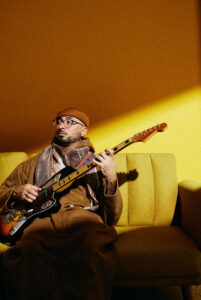
Tarik “Excentrik” Kazaleh – Born in California and raised between working-class Detroit and the ever-evolving political and cultural landscape of Oakland, Palestinian producer, multi-instrumentalist and MC Tarik “Excentrik” Kazaleh is best known for his oud- and percussion-driven beats, political vitriol and passionate lyrics. Considered a pioneer of Arab-American Hip-Hop, his diverse discography includes the revolutionary group Arab Summit (alongside Omar Offendum, Narcy and Ragtop), multiple film scores, the experimental Jazz trio The 3 Mohammads and many more. Excentrik’s 2011 album, Now Here, Nowhere, was a multi-genre attempt to diversify how Arab Hip Hop has been defined. The record featured Excentrik on nearly every instrument. He produced Naima Shalhoub’s debut studio LP, “Siphr,” released in August 2020. Longtime collaborators, Naima and Excentrik’s experimental studio chemistry is evident throughout the album, with special performances by Marcus Shelby and Ed Baskerville. That project led to the formation of the ShadowBand, an Arabic-Groove quartet which added Chris Trinidad on Bass and Aaron Kierbel on Drums. Excentrik’s latest album, Watani 77, is a 77-minute ode to 77 years of brutal colonization, occupation and Nakba in Palestine.
In partnership with:

Made possible in part by: